- by context
- by need
- by flexibility
- by people
- by well-being
- by experience
- by logic
- by future
- by context
- by need
- by flexibility
- by people
- by well-being
- by experience
- by logic
- by future
Lake Loppem
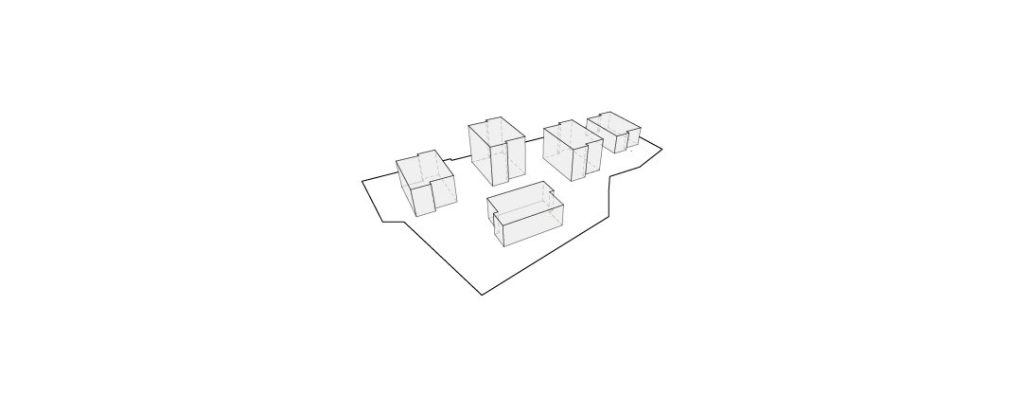
This collective housing project responds to the growing diversity of living needs within a context of limited land availability. The design is based on a flexible residential framework with generous floor heights and adaptable layouts. Group housing volumes are carefully positioned to optimise sunlight, views and privacy, while green spaces form a continuous extension of the surrounding park landscape. Terraces act as living space extensions and passive climate regulators, ensuring long-term spatial and environmental robustness.
Living Together in the green
Lac van Loppem responds to the growing diversity of housing demands in Flanders, where spatial scarcity calls for alternatives to the detached single-family home. The project introduces a collective residential model that combines individual spatial quality with a shared landscape structure.
The ambition is clear: to develop flexible dwellings within a park-like environment, allowing homes to evolve with changing household compositions and life phases. Adaptability is not treated as an add-on, but as a fundamental spatial principle.
Clustered Organisation and Everyday Spatial Quality
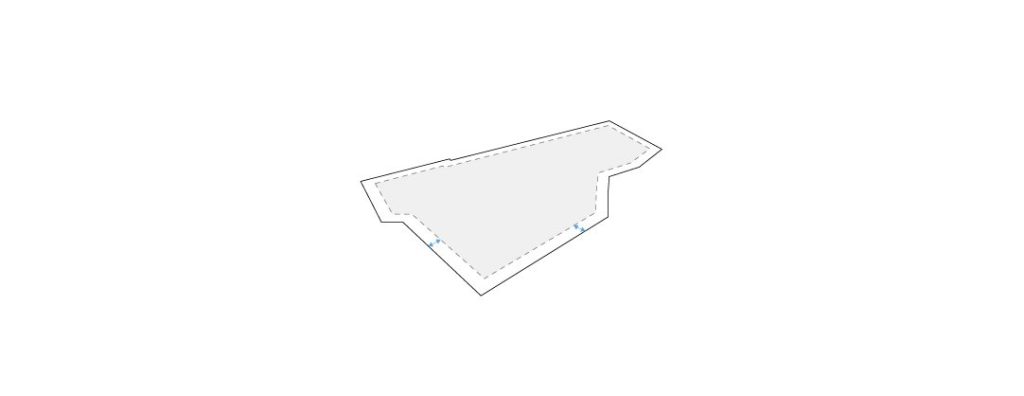
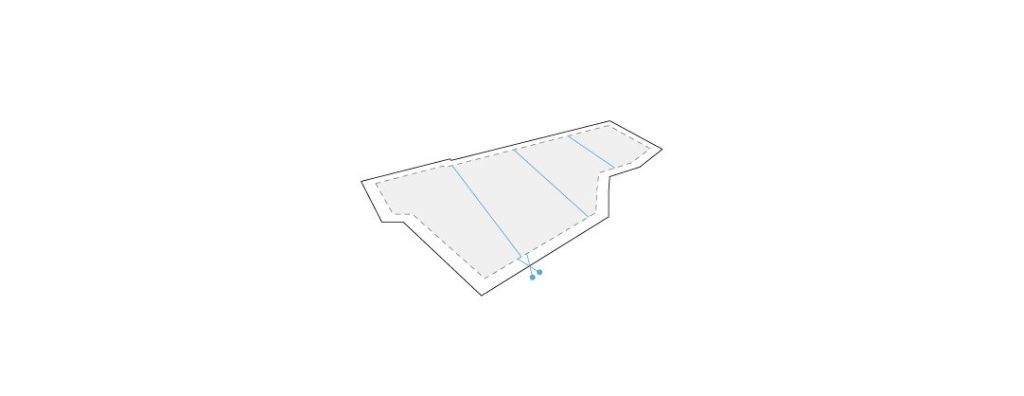
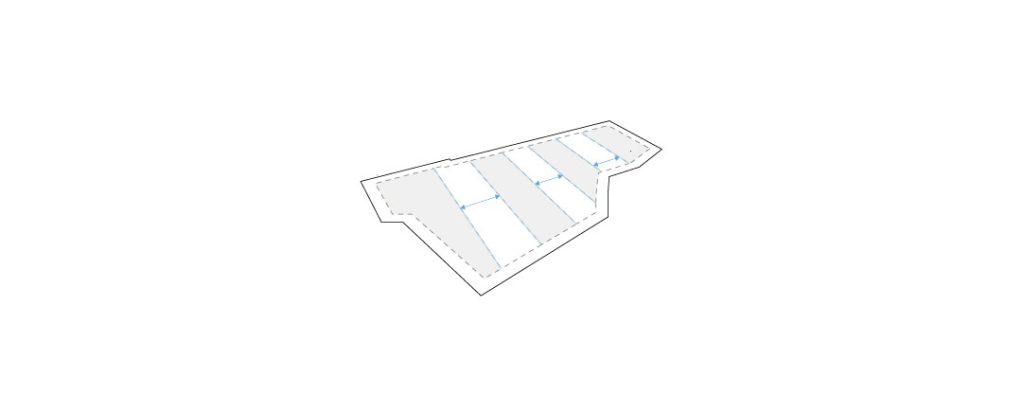
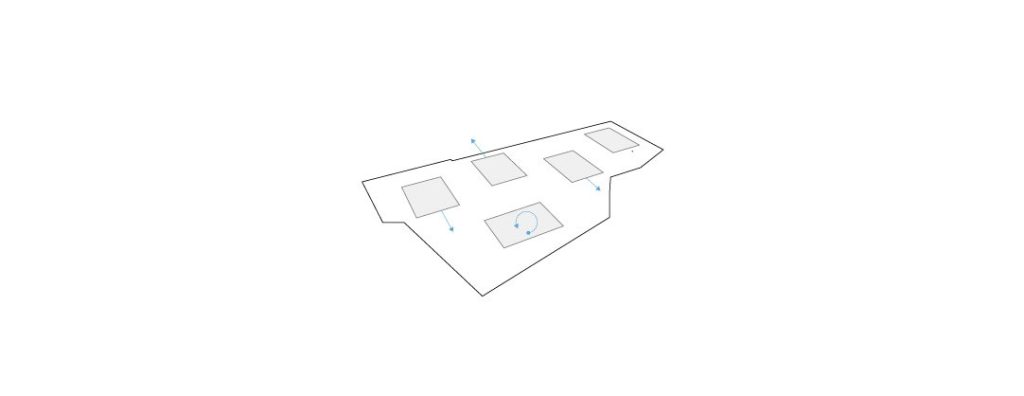
The programme is organised in grouped housing volumes that are carefully shifted in relation to one another. This positioning responds to sun orientation, shadow patterns and views, ensuring that each dwelling benefits from space, daylight and privacy.
Living areas are extended by terraces that function as outdoor rooms. On the south-west side, these terraces act as passive solar shading, reducing overheating while enlarging the usable living space. On the north-east side, terraces are more limited, allowing deeper daylight penetration into the interior. The result is a balanced sequence of indoor and outdoor spaces that supports daily life at both collective and domestic scales.
Structural Logic and Long-Term Adaptability
The architectural concept is based on clear volumetric compositions and rational structural principles. A higher-than-standard floor-to-ceiling height enhances spatial generosity and enables future reconfiguration. Internal layouts can adapt to changing needs without fundamental structural intervention, allowing potential shifts in programme over time.
Robustness and flexibility are therefore embedded in the spatial framework, ensuring durability beyond immediate housing demands.
Landscape as Collective Framework
The green space between the housing clusters extends the existing park landscape into the heart of the development. Rather than functioning as residual space, it becomes the connective tissue of the neighbourhood.
Each dwelling relates simultaneously to its private terrace and to the broader collective landscape. This dual relationship strengthens social cohesion while maintaining individual autonomy.
Low-Tech Comfort and Future Readiness
Passive solar control through terrace design, careful orientation and spatial generosity form the basis of the environmental strategy. The project prioritises long-term adaptability and spatial resilience as key components of sustainability, ensuring that the neighbourhood remains relevant as living patterns evolve.
- Year
- 2015
- Location
- Zedelgem, BE
- Type
- Residential + Interior
- Status
- Research & Studies
- Program
- Collective housing
- Surface
- 13.273 m2
- Client
- Global Estate Group
- Credits
- MOARE (visualisation)
- Year
- 2015
- Location
- Zedelgem, BE
- Type
- Residential + Interior
- Status
- Research & Studies
- Program
- Collective housing
- Surface
- 13.273 m2
- Client
- Global Estate Group
- Credits
- MOARE (visualisation)